
This Will Be Your Year Too
What's next for menswear in 2026? Plus: the big Thurston interview

“2026 is going to be your year,” Chris Maradiaga wrote me the other day. He’s usually right about things, so who knows — it might just be. When you’re reading this, I want you to know: this will be your year too, come what may.
It definitely feels as if we’re onto a good start. That’s leaving aside the terrible state of the world right now, of course. Is that possible? No. Is that impossible? Also no. I’ve started writing occasional features for Highsnobiety, which is definitely as exciting as it’s surreal. I’m particularly happy with this one, on the former Louis Vuitton finance guy weaving fabric for some of the best French brands out there, including Maison Douillet, Jean Laumet and Burgaud.
That said, it also comes with some discomfort and anxiety.
When I started this newsletter after leaving academia, I promised myself to always remain an amateur with a beginner’s mind, whatever might happen. Fast forward to today, it turns out that not knowing things is much harder than believing it’s important that you do. One reason the notion of being a “professional” didn’t catch on — I’m talking about the nineteenth century here — was that being paid to act upon your natural curiosity was seen as an insult. They were all rich white men, but I get what they were saying. And it can be taken a step further, I’d say. It’s not about actually getting paid; it’s about allowing yourself to turn into someone who’s payable.
Besides, the moment you become professionally invested in something — whether that’s because your readership is growing, or because you’re making some money from what you do, or because you come to see yourself that way — you get into a situation where you suddenly have something to lose. Be it your readers, your income, or worse, your ego.
“Why are other newsletters getting so many paid subscribers? Are they doing something I’m not doing? Should I be doing that too? Am I even able to do that? Is this the right place for me at all? Do I know anything about this stuff? Do I even like clothes all that much? Who am I kidding? You said you’d never tell other people what to wear — and at the first opportunity you get, there you go doing exactly that. You don’t even know what to wear yourself. I’m a terrible person.”
That’s the kind of inner spiral the feeling of doing well can get you into.


But let’s forget about me. From a broader perspective, 2026 could be a turning point for the menswear we love. Rather than predictions, let me voice what I’m seeing, feeling, daydreaming — in no particular order.
I would like the brands and makers I and others are covering to be freed from well-intended, but ultimately subtly condescending labels: small, under-the-radar, independent, crafty. There’s nothing inherently wrong with these labels, but they tend to define things s by what they lack or are not. As if “big,” “on the radar,” “established,” “large-scale” are — and will forever be — the standards against which everything else must measure up.
When that happens, these small brands might actually make the big ones better or, who knows, make them run out of business. I mean, it has apparently become accepted now to say you don’t buy a €650 Margiela shirt for the quality of the fabric or construction. There are two options to put an end to that. Either capitalism dies or people — including those working at Margiela — come to realize you can buy 2,5 shirts by Camisas Manolo for that money. We all know which option is more likely.
This year could also be the year that good menswear has its minimalist, natural-fabric, and black-brown-or-taupe-colored feathers shaken. I’m not saying I hope it will happen — only that I can feel it happening, both outside and within myself.
We’ve seen the occasional red and purple this season, but the Auralee color palette has yet to burst onto others. We’re witnessing signs of weirdness entering the menswear conversation beyond Camiel Fortgens: trashed pieces from Ancellm or Edward Cumin, paint-splattered vintage stuff offered by taste-making boutiques like Swimmers or Snagged Rags; and indigenous aesthetics from regions in India and China, through brands like Itoh and ZAMX. On that note: place-basedness has been driving good menswear in recent years, but the number of places the brands we wear come from has remained extremely limited. Let’s change that shall we?
Likewise, outdoorsy silhouettes are moving beyond the technical gorp-realm — and in the process they’re getting entirely stripped of synthetics, instead made from cotton, (loden!) wool, and silk. I said it last April, and I’ll say it again: I’m sure it’s only a matter of time before brands like Ranra are stocked at the Neighbours of this world. Working is already doing some of that work, and so is Thurston.


Finally — and I apologize for saying this, in a way — I see us moving beyond a focus on clothes for the sake of fabric, or even clothes for the sake of clothes. I don’t mean we’ll be returning to narratives or concepts, god no. I feel like we’ve established what good (well-made, well-fitting) clothes are, and are now ready to explore how they’re part of, and what role they play in, the good life.
Since we’ve already established that no commercial object whatsoever, including clothes, will guarantee a good life, this might involve more than you’d think. Put it this way: I feel there’s a relation between combining a Gajiroc hoodie with a ‘70s Carhartt Detroit Jacket, Hans Reichel playing his daxophone, and an interior by Josef Hoffmann, and I really want to know what it is. That’s the kind of thing menswear is about too, as far as my 2026 is concerned.
So much for New Year’s reflections. The gist: we’re back, and moving forward. Also — why not start the year by leaving a like, sharing this post, recommending us to friends and family, or subscribing/upgrading? Any of these things, let alone all of them at once, are appreciated. Thank you!
A couple of weeks ago, I wrote that the post-beanie world is upon us. I might have been wrong. But then again, 2025 was the year performativity shook off its character as the of dusty university-hall-full-of-students-discussing-J.L.-Austin concept it once was, and found widespread social media use. My basic point, at any rate, was that beanies might be good (like this one by Dana Lee Brown), but other types of headwear are becoming better and better. I really like what Tokyo-based brand Nine Tailor is doing. They’ve got everything, from fur dill caps, chunky flap caps, wool flight caps, pom pom knit hats, and Basque hats. But some of Cawley’s styles top them all when it comes to wearable weirdness.


Another designer leading the post-beanie pack — yes, okay, he also does beanies — is Fielding Miller from Thurston. I mentioned him in an earlier feature, but it’s time for a proper introduction. A couple of weeks ago, we jumped on a call to talk about whatever was needed to make sense of his incredibly fast rise. I mean, he got his first collection of high-performance-driven headwear ready after the buyers’ deadline for AW25, and it still found its way to some fifteen taste-making stockists, including Ven.Space, Neighbour, Understory, Rising Star Laundry, and Nepenthes.
Some of his styles, like the sold-out Wind Pro Alpine Hat, can be hard to pull off. But maybe that’s just me. Though not a fashionista (his words), Rhys Kearns — formerly at Norse Projects — definitely can, and so can Frederick Sellier from thv4gsb. That said, we’re talking about a function-first product here, meant to keep you warm on snowy slopes, not make your urban life easy. Take the Alpine Hat itself. This is a superfleece that’s designed to offer four times the wind resistance of literally any other hat in your closet.
What got Fielding into this? What’s his take on men’s headwear? What’s next for Thurston? And how do you get hold of new products before they’re sold out? Here we go.
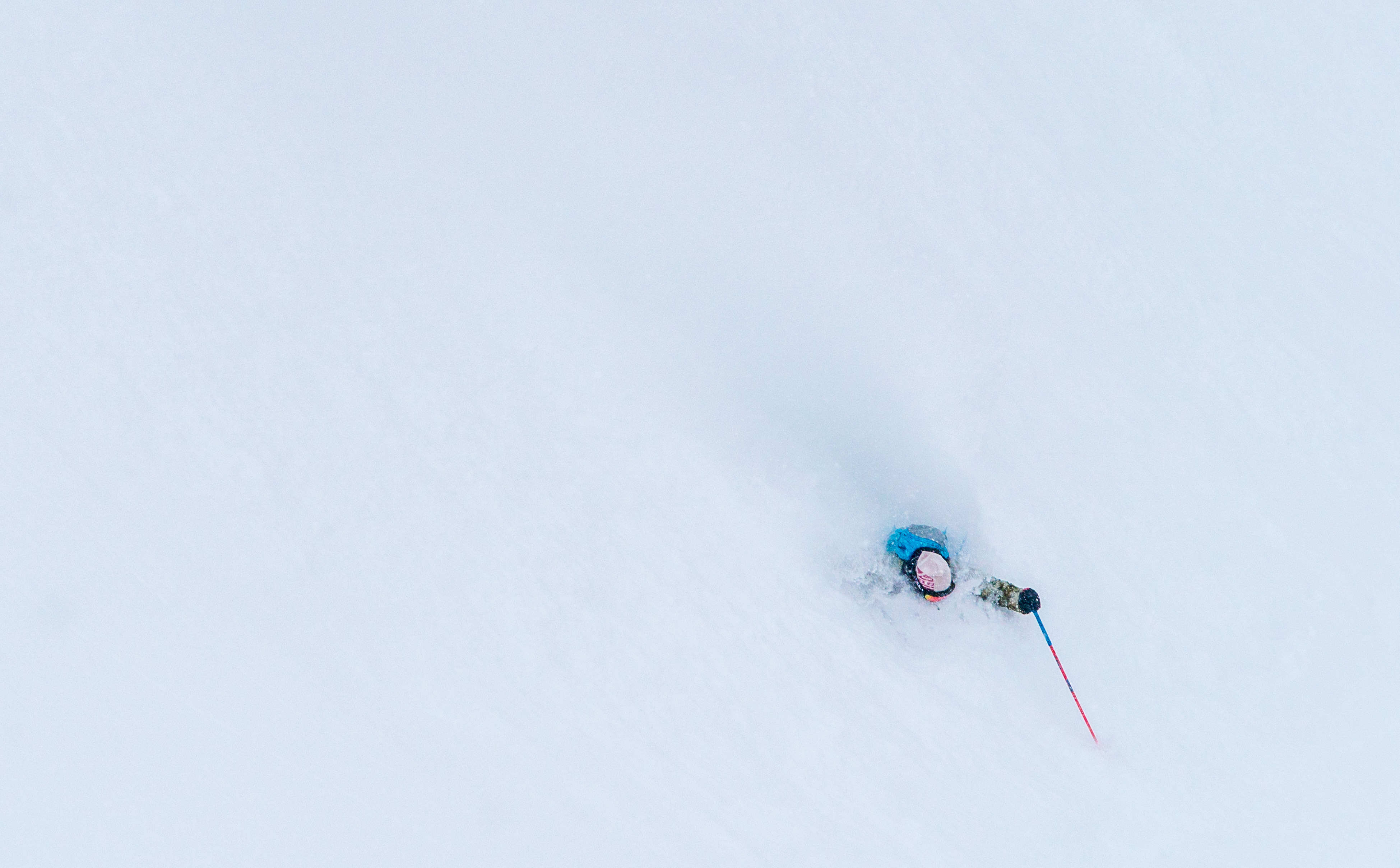
Lukas Mauve: Hey Fielding, thanks for agreeing to this conversation. Where are you now and what have you been up to this first week of the new year?
Fielding Miller: “I’m in Aspen and we’re getting some snow so I’ve been skiing. But mainly I’ve been working on getting product from British Columbia to here, and bringing that to the market.”
Lukas Mauve: How are the preparations for Paris Fashion Week going?
Fielding Miller: “I haven’t had much time for outreach other than the stores I’m working with and people I’ve already been in touch with, but that’s the main focus anyway. I’m looking forward to seeing people. Along with the product, people are the point.”
Lukas Mauve: In this post-beanie I did, I placed you at the forefront of a new wave in men’s headwear — exploring unconventional, experimental styles. How do you look at that?
Fielding Miller: “From Thurston, I look at it with gratitude, because it’s surreal to get that kind of recognition. But I also look at it with some wariness, because the product comes from a pure desire for functionality and versatility, not ‘fashion’, even if that’s what it ultimately is.”
Lukas Mauve: I feel some of the styles you’ve been releasing, especially the Alpine Hat, is already quite adventurous.
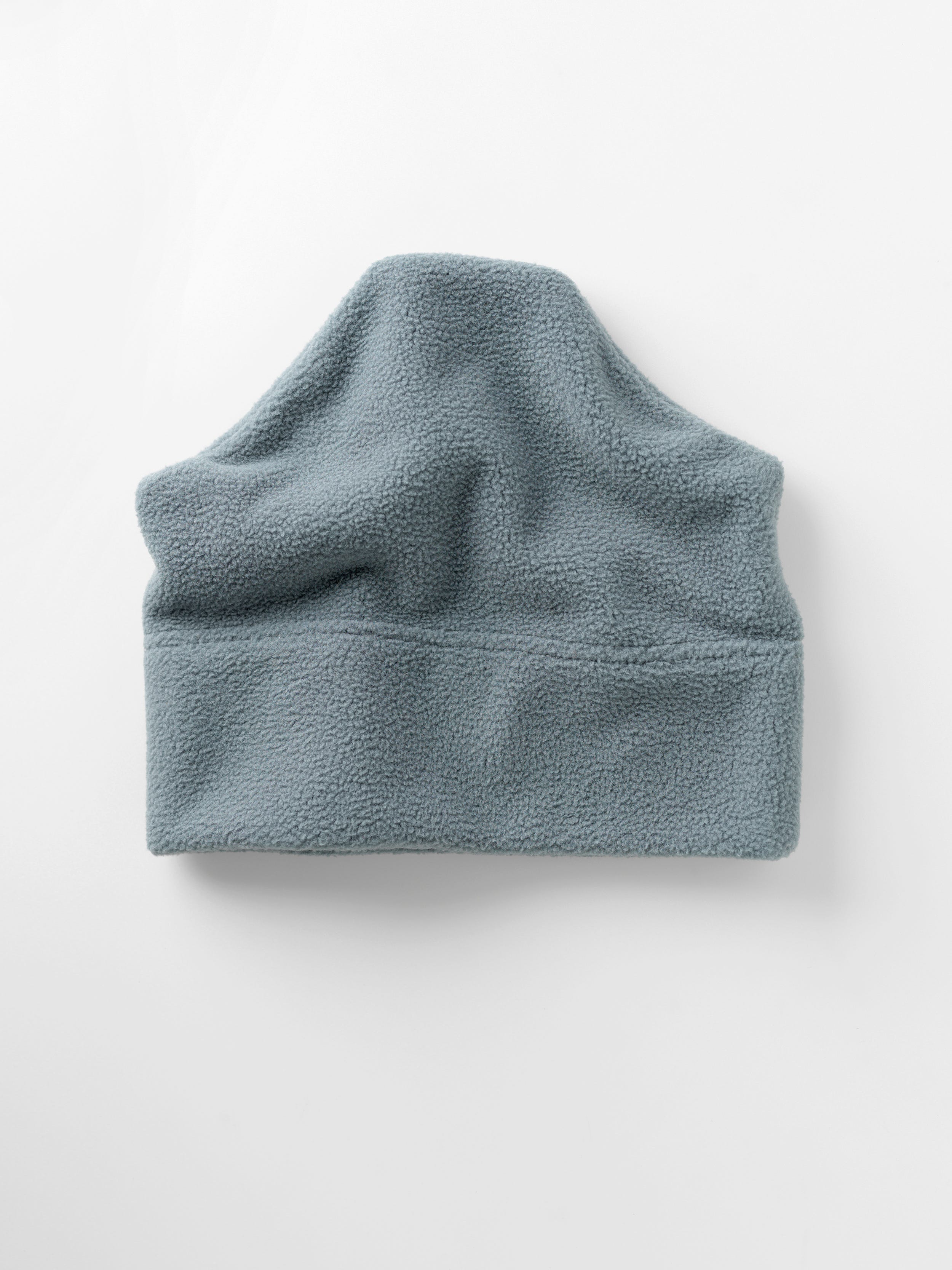
Fielding Miller: “It’s not the case for me because that style references a hat I found in my parents’ basement that my dad used to ski in when I was a little kid. It was a Patagonia style called the Synchilla Alpine Hat. I reinterpreted it, updating it in a denser Wind Pro fleece.”
“The reason I started with this style is because it was just, quite honestly, a simpler silhouette for me to figure out how to create a pattern for, compared to a classic beanie shape. It’s one piece of flat fabric folded over and then sewn. And not to be like, ‘oh, I was ahead of it’ or anything, but no one I knew was wearing this style. For skiing and snowboarding, hats are a great way to express yourself. I liked it because it was different and more functional than all the crappy disposable beanies that were so pervasive.”
Lukas Mauve: It’s been consistently sold out on your website, right?
Fielding Miller: “I didn’t have as many, and I ended up reserving the remainder for wholesale. It was my first product, and there was more interest than I anticipated. An updated version will be available to Thurston newsletter subscribers on the 12th of this month. It will be slightly less tall, making it more easily wearable, with improved needlework.”
Lukas Mauve: Your list of stockists is quite impressive, also considering the fact that many of them — like Neighbour and Lost & Found — are fashion-forward boutiques rarely picking performance-oriented gear. What do you make of that?
Fielding Miller: “I wanted the product to be available in both the most respected gear shops as well as the most respected fashion-forward boutiques. Operating in both of those worlds seemed like the most interesting way to work on this and meet people. All outstanding stores are places of discovery, and the fashion-forward ones thrive on offering emerging products with carefully-considered use of exceptional materials. That’s what I’m focused on, so to have it be a fit is validating.”
Lukas Mauve: Can you tell me about your first account?
Fielding Miller: “Yeah, it’s called Performance Ski, here in Aspen. It’s right off the Aspen mountain Gondola Plaza, and they’re world-class merchants. It was the first store I approached, and their support — especially so late in the season — meant a lot. Thank you to Dairinn Bowers.”


Lukas Mauve: What was your next move after getting that first account?
Fielding Miller: “I went to New York City and while I was there I met Chris Green from Ven. Space. I just went to the store, he was right there watering the plants. I introduced myself, asked if I could have a moment of his time, and told him I’m a skier and snowboarder focused on creating the best possible headwear. He immediately got the product and that was a huge break. He was asking thoughtful questions, offering helpful solutions, texting Saager from Neighbour pictures of the product on the spot. He’s helped so much.”
“After I got back from New York, I took a massive Western-North American road trip, sleeping in the back of my truck. I went through all of the major ski towns as well as all of the major cities — Vancouver, to see Neighbour, Seattle, to see Windthrow, Los Angeles, to see Mohawk General Store, and the Bay Area to see Understory and Rising Star Laundry.”
Lukas Mauve: When you say Chris Green from Ven. Space “got it,” what do you mean exactly?
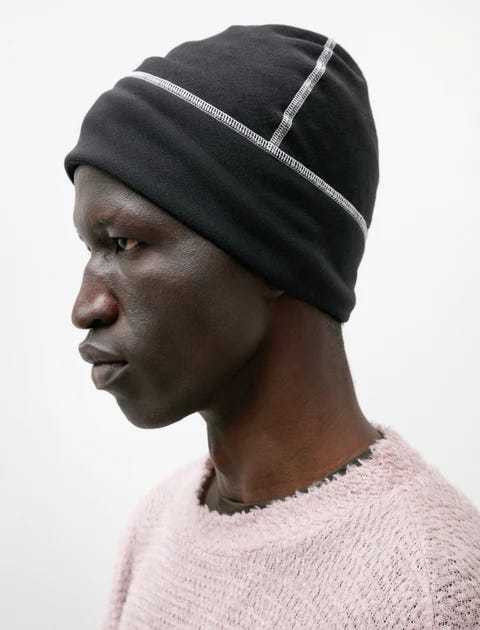
Fielding Miller: “He seemed to appreciate the quality and the positioning, and that no one was giving the category this treatment. I also remember him saying he loved that I didn’t put any logos on it. He went to a mirror, tried the pieces on and right away was like: ‘Yeah, we can sell these.’ I could tell he knows what he likes and what he doesn’t, so I could feel his confidence in the product. He has a good eye for clothing, and he’s also a high-level runner, so he got both aspects.”
Lukas Mauve: I know it’s been a challenge for you to keep Thurston products in stock, both on your own website and for your retailers. Could you explain why that is?
Fielding Miller: “I had to work through some initial production delays. It’s a small, year-zero, bootstrapped project. Also, I prioritized accounts over the website. Any account that ordered before fall got what they wanted, when they wanted it, in one clean delivery. If retailers are out of stock, it’s because they’ve sold through, which was the objective.”
Lukas Mauve: Let’s look ahead. What new styles are you working on at the moment?
Fielding Miller: “Along with updates to the original, foundational styles [the Balaclava, Beanies, Skull Cap, and Alpine Hat — LM] there’s a High Loft Wool style which will come out next week. Upcoming developments include hot-weather product, increased usage of natural fibers, and more advanced designs.”
Lukas Mauve: And what new fabrics will you be using for them?
Fielding Miller: “Many are still in testing, but for example this new High Loft Wool is one I’ve used extensively and loved. I don’t know of anyone else using it. It’s made by Polartec on the same machines as Alpha [once developed specifically for the U.S. Special Forces — LM], but uses fine merino wool, and is in Polartec’s High Loft line. Like Power Wool, you get all the benefits of wool next to skin along with increased durability. But with only wool on the face and back, and a more open knit structure, it has a unique airy feel, and a natural look.”
Lukas Mauve: What’s been driving you to explore these new directions, in terms of styles and fabrics?
Fielding Miller: “I’m creating the products I wish existed for all conditions. Most of these start with materials. Some start with shapes, but are only ultimately enabled by the right material. There’s a big backlog at this point, but I’m very carefully developing foundational styles that deserve to continue to exist.”


Lukas Mauve: In the post-beanie piece I mentioned earlier, I started from a divide between the “synthetic” and “natural” camps in men’s headwear right now. Does that divide make any sense to you or not?
Fielding Miller: “Whenever possible, I only wear natural fibers for multiple reasons. But if you’re moving throughout harsh environments, synthetics enable the most lightweight, packable, protective, fast-drying, and durable solutions. For example, Wind Pro is used specifically because it does things that no natural fiber material does.”
Lukas Mauve: A final question. Thurston is a Colorado-based brand. How does place matter to what you do?
Fielding Miller: “It does in the sense that different places make you feel different ways, and this place — with the people here — has provided me with a great deal of inspiration that has informed what I do. That being said, I’m not actively trying to root the brand or myself here forever. I think people just want to know where something’s coming from, and this is where I’m based now. I know I’ll continue to be based somewhere for the winters where I can ski powder. That’s what feeds my soul…”
*Cover image courtesy of thv4gsb x Hanwag
It’s been a pleasure following your work over the past year — it’s pushed me to become a better writer and to look at fashion from a less conventional perspective, which we desperately need more of in this space.
This is going to be a huge year for you, and I’m excited to see it unfold.
Love your taste and your letters, I'm sure it'll be a great year for your work. Congrats on the Highsnob features!