
This Week #20 | Gottlob World
Happy abundance!

PRESENT FOREVER is the new go-to source for exploring independent clothing and style from across the globe. Please consider subscribing or upgrading to paid to help expand this off-beat universe:
Somehow, luxury watches and jewelry always make me think of Walter Benjamin. The reverse is not the case, by the way: Benjamin has never made me think of an Omega Speedmaster or a Sophie Buhai pendant.
It’s probably got something to do with luxury accessories’ particular aura. Benjamin famously argued that “even the most perfect reproduction of a work of art is lacking in one element: Its presence in time and space [“aura”], its unique existence at the place where it happens to be.” There’s a sense in which a high-end watch or bracelet is authentic and singular like a piece of art. But then again, none of them are similarly unique to an Agnes Martin, say. Still, they are commonly perceived to have an ineffable quality exclusive to one of a kind objects.
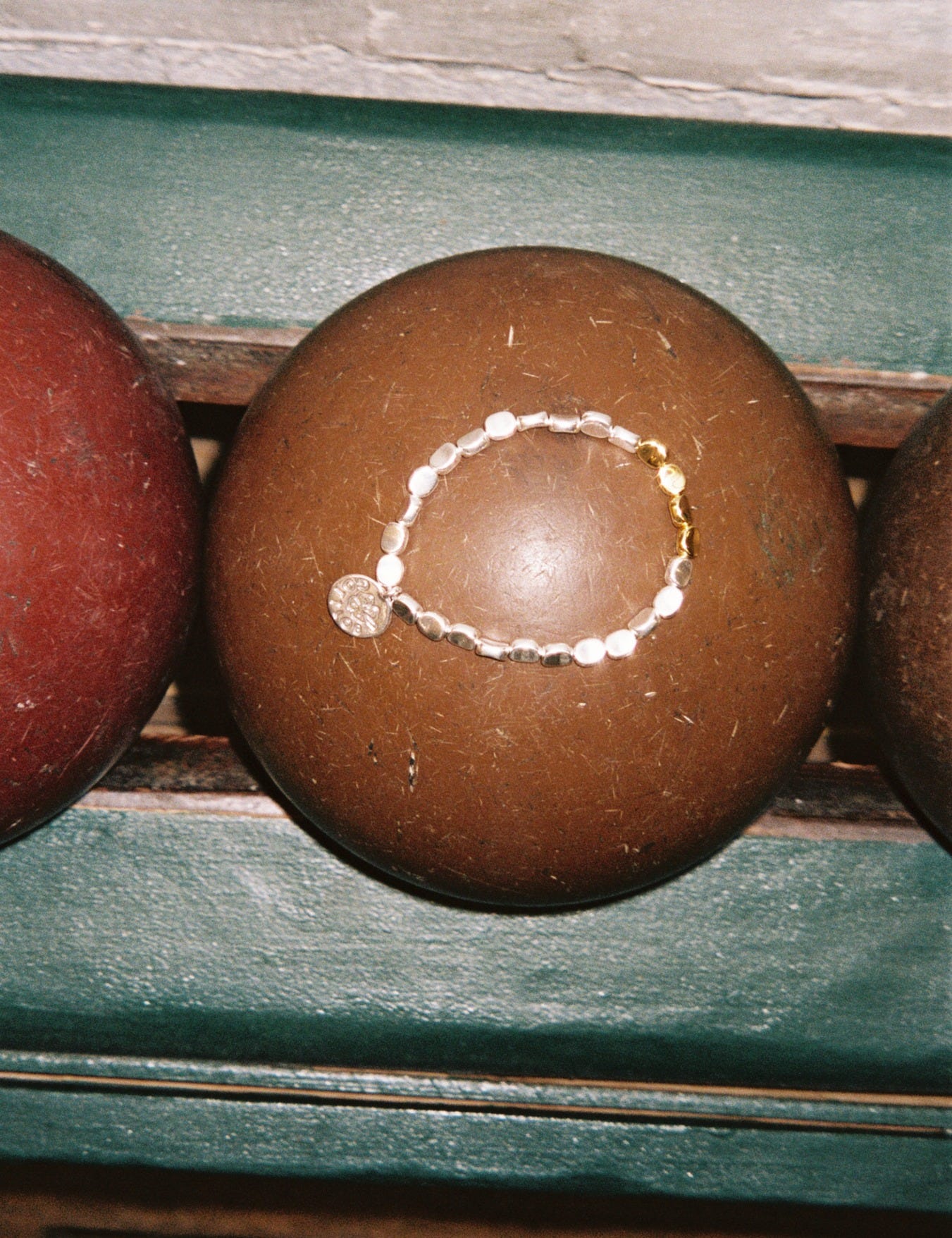
This is where craft and capitalism meet. Because of “the hand’s redundancy for [re]production,” Benjamin placed artisanal products somewhere in-between what is and what isn’t mechanically reproducible. When it comes to luxury products it’s clear, however, that their ineffable uniqueness is connected or even proportional to their permanent scarcity. Perhaps scarcity was initially inherent in certain goods or manufacturing processes. But today it’s often neither a necessity or a coincidence but almost without exception an intentional creation.
Some scholars distinguish different scarcities, each with their own self-fashioned aura. “Limited edition” scarcity, for example — the small-batch production of a specific product, available for only a short period of time — creates the fear of missing out on something seemingly unrepeatable. Or take “information scarcity,” where sellers control market prices and available distribution in order to create a perception of uniqueness about products that aren’t naturally scarce at all.
Looking at my own real-life experiences, it would make sense to add “knowledge scarcity”. Whenever you walk into a jeweler, it only takes a couple of minutes before you realize you know very little about their offerings, whether about the factual materiality or the sensible experience. On the spot, that usually results in the feeling that you don’t belong there. Once that feeling kicks in, you begin to feel self-conscious. This, in turn, leads the clerks to ignore you because they believe you’re not the kind of person worth their time — which only intensifies your unease and, as such, sets a downward spiral into perpetual motion. It’s what makes jewelry intimidating.


More generally speaking, it seems that knowledge here is not a welcome side-effect of, but a necessary requirement for appreciation. Some hard-liners will argue that the same holds for your jeans or shoes. Perhaps that’s true. But it’s not really true. There’s something about luxury accessories that’s different from anything else. You must know your watch to truly earn your watch. You must be epistemically worthy of your necklace. That goes beyond money. In fact, it’s exactly what money can’t buy. That’s scarcity’s ugly charm: at the core of what’s only affordable to the lucky few lies the pecuniary inexpressible. If ever there was a perfect desiring-machine, this unapproachability of high-end accessories is it.
That’s how the world works, I guess. Perhaps not in these words, but still — the words are just doing their best to capture what’s going on.
I believe it’s interesting to know how the world works. But I also believe that this knowledge is interesting mostly because without it, it’s much harder to think of and create alternative worlds — worlds, for example, where scarcity doesn’t exist. Some of these alternatives are huge and all-encompassing, like Aaron Bastani’s Fully Automated Luxury Communism, aimed to liberate us from work and create universal prosperity. Others, like Gottlob’s, are more subtle and human-scale.


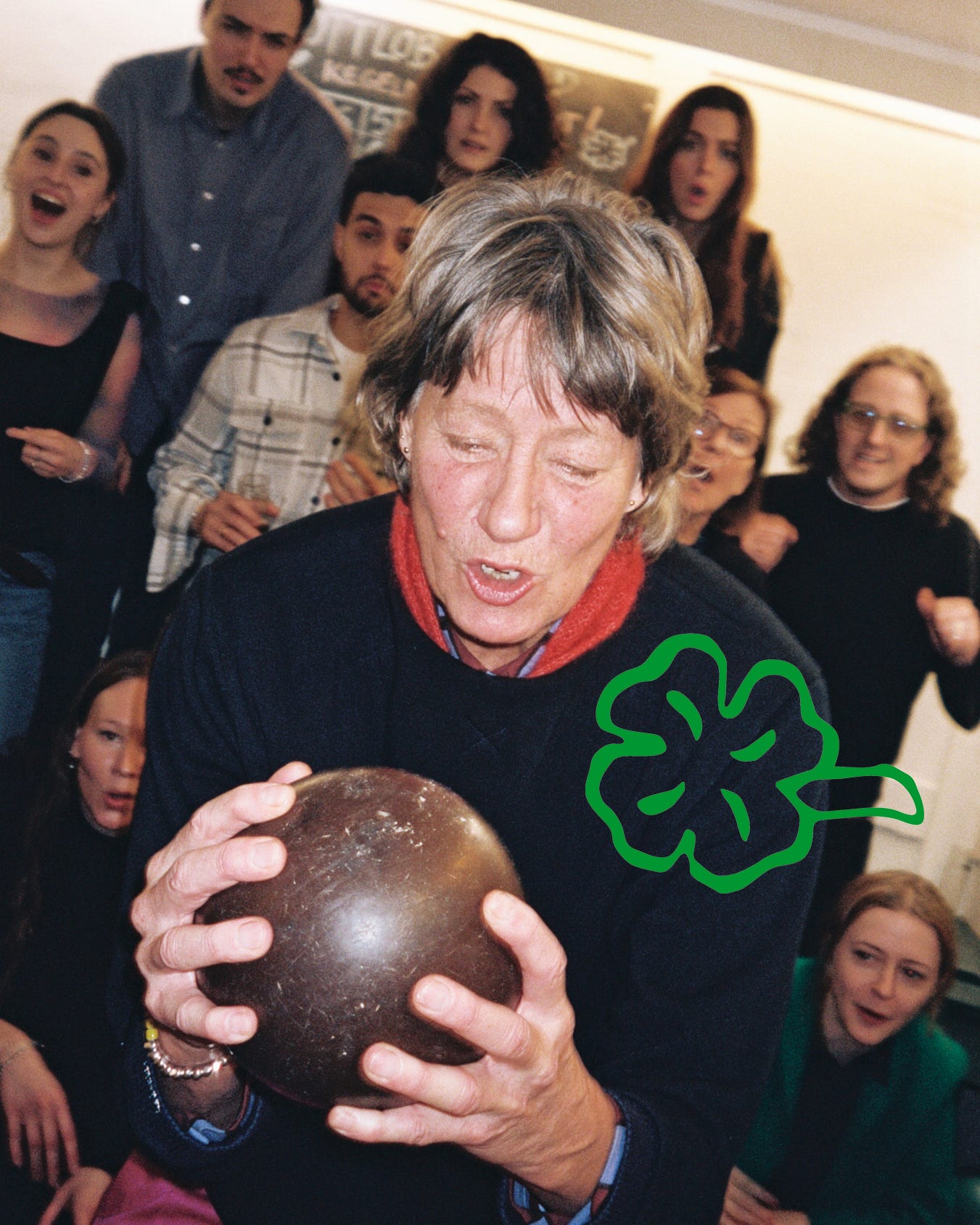
Established in Cologne, Germany in 2002 by Barbara Gottlob, it was relaunched as “Gottlob World” by her son Moritz in 2024. The name made me think of nominative determinism: the light-hearted conjunction that people tend to gravitate towards areas of work that fit their surnames. A Frederick Taylor working as a tailor. An Arthur Prior studying logic. A Daniel Snowman writing on polar explorations. A Faye Toogood — well, with that name she could have chosen any profession. Barbara and Moritz Gottlob would fit this Borgesian list: their jewelry — handmade in the family atelier, all with a branded four-leaf clover — bring exactly the kind of joy and relief expressed in the German word gottlob. “Our aim,” as they write, “is to bring people together with Gottlob being the lucky charm in your everyday life.”
Apparently, another world can be as simple as that: a mother and a son working together to create well-made, affordable and accessible objects. Bracelets, necklaces, and other accessories, that is, which are reproducible but yet have a distinctive aura — a gentle existence exactly at the place where they happen to be.
I first met Moritz at a small get-together in Paris last January. He was so easygoing, so friendly — somehow radiating the same happy-go-lucky attitude that’s characteristic of a Gottlob piece. Everything he told me about his journey with the brand felt disarmingly joyful: he simply likes to make what he makes, he travels back and forth between Germany and Japan — meeting new people and old friends on the go — and he’s stocked by some of his favorite stores, including Neighbour, Understory and Maplestore. He said he’d be happy to have a conversation via email. My questions landed in his inbox when he just got to New York, where another of his stockists, Ven. Space, hosted “Love Connection” the day before Valentine’s day, presenting an exclusive limited-edition bracelet from Gottlob.


Lukas Mauve (LM): Hey Moritz! Paris is over, and I believe you’re on your way to or just arrived in New York. How are you experiencing the start of the new year?
Moritz Gottlob-Schönenberg (MGS): Yes, I’m in New York for a pop-up at Ven. Space in Brooklyn, one of my favorite retail spaces. I’m trying my best to stay on top of everything. Lately, I’ve started writing things down on paper — it really helps me stay organized and navigate everything more easily.
LM: How are things going for Gottlob at the moment? What are you most excited about or thankful for right now?
