
Good Old Clothes
Introducing Swimmers (US)

Thank you for reading Present Forever. If you’d like to support this ongoing exploration of the offbeat and independent, please consider subscribing or upgrading:
There are plenty of reasons to jump on the vintage bandwagon — even now, as some people with knowledge of the business insist it’s over. The closer you look, the more you realize how much of what’s presented to you as new is actually old. And once that realization sinks in, your desire to get the old — rather than some reworking or reinterpretation — grows. That’s obvious. But obviousness tends to need reminding.


I’m avoiding the word “original” on purpose, of course. After all, another reason vintage, despite its supposed imminent death, feels so alive is that it can still be pretty affordable. Jake Silbert is right that “dressing for yourself” — read: finding, buying and wearing clothes that feed your soul — “comes with a price.” But that doesn’t take away the fact that menswear has a price problem. There, I said it.
That problem becomes very real once you can’t afford clothes that are meant to be worn, made by brands operating on a more human scale. It becomes even more real when you realize that the kind-hearted people making them often can’t even afford them themselves.
I love Unkruid, but I’m finding it increasingly hard to love a €1200 breezy jacket, no matter how good it is. That’s because it leaves me with questions I can’t answer: is it okay to love clothes that only a few people can give love? Is it okay to be okay with scarcity if you know its a driver of inequality?
Yes, I know 99% of clothes are simply too cheap. Yes, I know good clothes cost much money and labor. And yes, I know you could ask the same questions of haute couture, but these ones hits differently and, I’d reckon, much harder. We’re talking about real clothes for real people here.
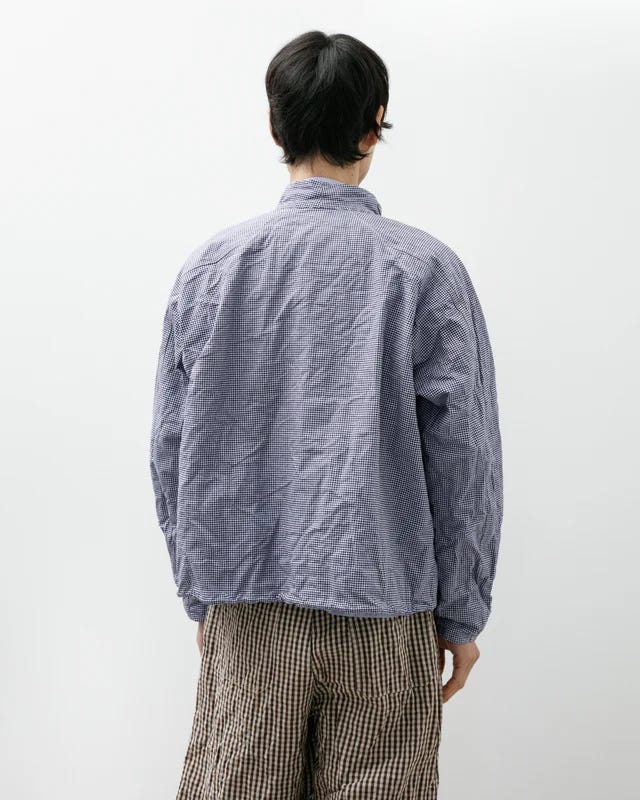
That’s what I like about vintage right now: it lets you wear and experiment with good clothes without needing to be an oil tycoon, or some 21st-century corporate equivalent. The catch, obviously, is that you can only experience these things if you’re lucky. No sizing options. No “I’ll take this in light brown.” No waiting for a sale. It’s pure contingency, now or never, wrapped up in one moment of bliss or despair. That’s an exaggeration, but not too far from the way it actually feels.
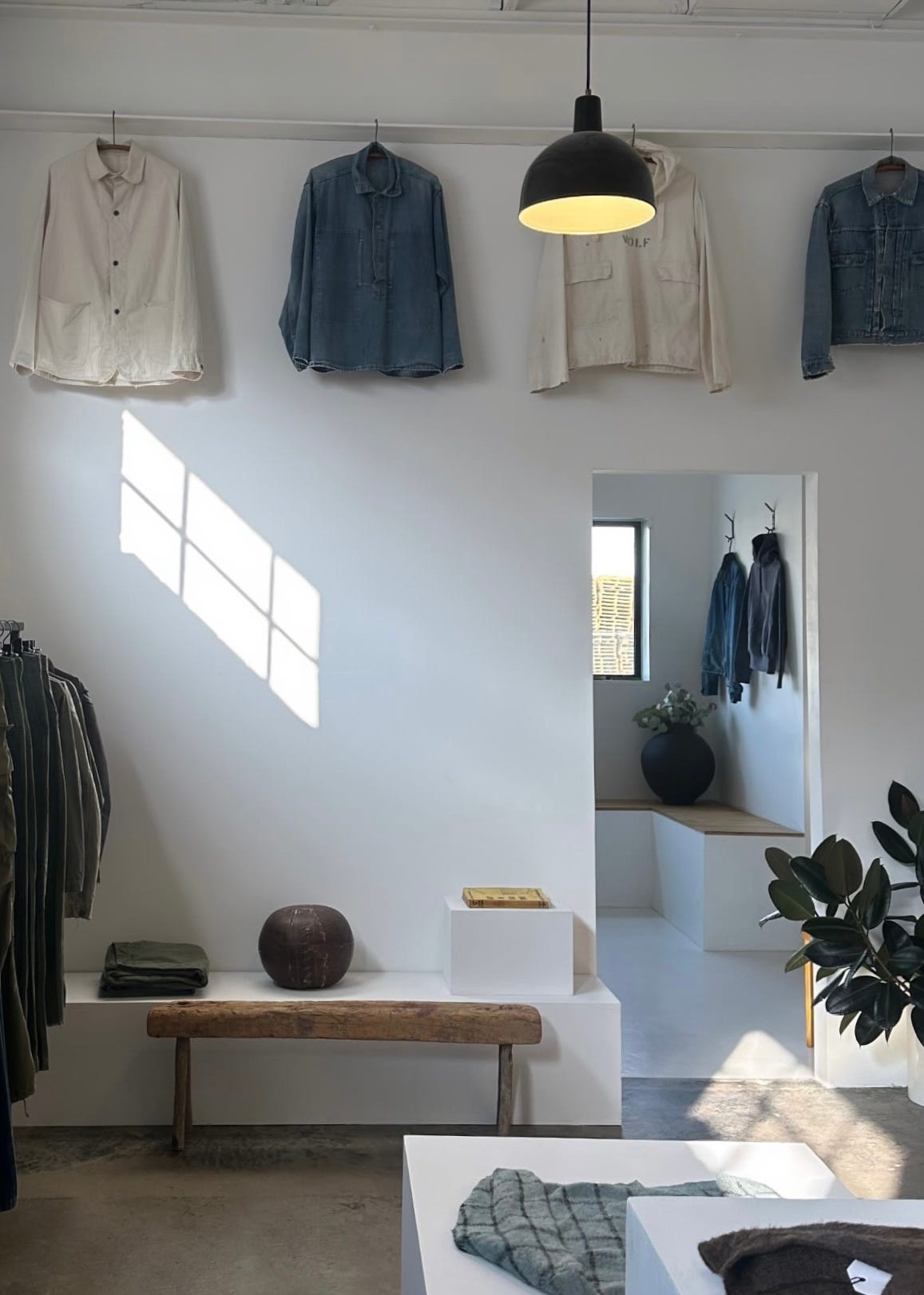
It’s possible to increase your luck, though. That’s where curated vintage stores come in. There’s an infinite number of them, but one of my current favorites is Swimmers. What sets them apart is that they hit a sweet spot: highly curated, extremely well styled, and very reasonably priced. Swimmers, which opened its doors in 2017, is run by wife-and-husband duo Taylar and Samuel Capener and plays a crucial role in the emerging Salt Like City clothing scene.
It’s the go-to place for vintage finds of one particularly talented local, Bryn Bingham from Brynner’s. After years of shopping there, he still visits almost once a week, working just down the street. “They do a great job of mixing in the high-tier vintage pieces with more niche or under-the-radar styles that I haven’t seen anywhere else, like this amazing 60s/70s French smock they posted the other day,” he says. Brynn recently picked up several pieces, including a pair of 40s droploop trousers and 50s Dutch cargos.
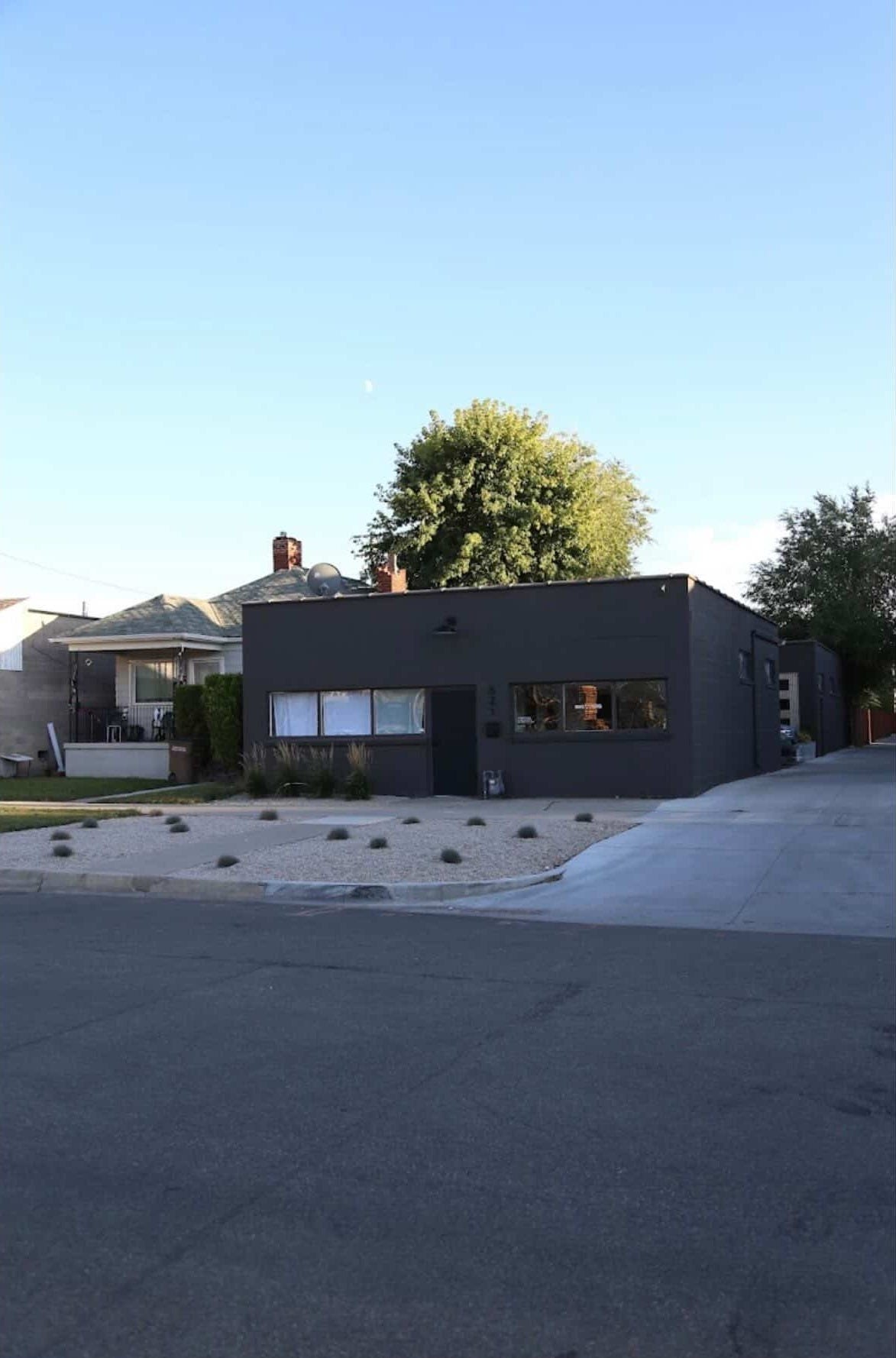
But the store also offers him source material for the clothes he makes himself. “My work references construction methods and details from vintage clothes, and being able to touch, wear, and learn about the history of these clothes from the Swimmer’s team is really valuable,” he says. “On numerous occasions, I’ve visited them and picked up new things that found their way into my own designs.”
Taylar (32) and Samuel (30) are both from Salt Lake City, where they met at a shoe release party some years ago. She was into sewing and rock climbing, he grew up skateboarding and working at a local skate shop. They decided to stay put to be close to family and the mountains, and because Utah proved an incredible play to find vintage at thrift stores, estate sales, and small town flea markets. After selling vintage on an online marketplace for some time, they realized they could turn it into a living. They first built a website and later a small showroom. Not long after, both quit their day jobs and went all in. A big new drop of vintage gems will be online next Thursday — more info (also about early access) to follow below.
Last week, Samuel and I jumped on a call to dive into Swimmers — or swim across Diver, if you will — to discuss fantastic vintage, and where to find it, the Salt Lake city clothing scene, and a 12oz Japanese cotton jacket he’s been working on.
What first got you into clothing, specifically vintage?
Honestly, I’ve been into clothing for as long as I can remember. I grew up around older siblings and their friends who were skateboarders and musicians, all with distinct personal styles. I remember being eight years old cutting up my clothes or having my mom alter them so I could mimic what they were wearing.
What’s it like to be “into clothing” in a place like Salt Lake City?
It’s a very small city compared to Los Angeles and New York City, but the clothing scene here is definitely growing, and vintage is very big out here. My favorite vintage store that I’ve been going to since I was a kid is called Decades. It’s your classic old-school vintage store and they have everything from every era. I still go there at least twice a week.
From what you told me, the process of turning Swimmers into a full time job sounds incredibly smooth. How did you make that happen?
After selling on this online marketplace for a while we realized it just didn’t feel uniquely ours. The biggest difference in how we sold vintage online at the time, which not a lot of other small vintage companies were doing, was that we always used a model and did “on body” photos. That helped people really see how something would look when worn, as opposed to just a flat lay photo.
I think to find success in this business you really have to love old clothes and everything that goes with it — not just the finding, washing, and mending, but also the ups and downs of spending hours searching and sometimes not finding much during certain months.
Do you recall the moment you realized the thing about Swimmers that made it “uniquely yours” actually worked?
The specific moment we knew we could actually do this for a living was around 2018. We were already doing pretty well online, and my wife Taylar found a pair of nearly deadstock 50s Levi’s 501s at a thrift store. We sold them instantly for around $3000, which looking back was actually a low price even then, but to us it felt like the best day of our lives! We both quit our jobs shortly after that — I worked at a local bakery and Taylar was a nanny — and around that time we started finding some really great stuff.
You told me about how you got into clothing. What got you hooked on vintage clothing specifically?
My older brother and sister also owned a vintage shop in the early 2000s, and I spent a lot of time there trying things on. My brother would take me to thrift stores and teach me about details like “Made in USA,” fabrics, construction, and that stuff really stuck with me. I’ve literally been picking vintage ever since.
Of course, vintage is a container term for very different types of old clothes. What kind of vintage are you drawn to?
Taylar and I are typically drawn to clothing from the 1930s through the 1960s, especially workwear. I also really love military clothing — some of the best and most influential designs ever came out of the U.S. military.
All vintage workwear was designed purely for function, which explains its simplicity and honesty. Every stitch, pocket placement, reinforcement, and fabric choice came from real use. Its just because it was made so well and looks so good that it inevitably became an inspiration for “trendy” modern clothing.
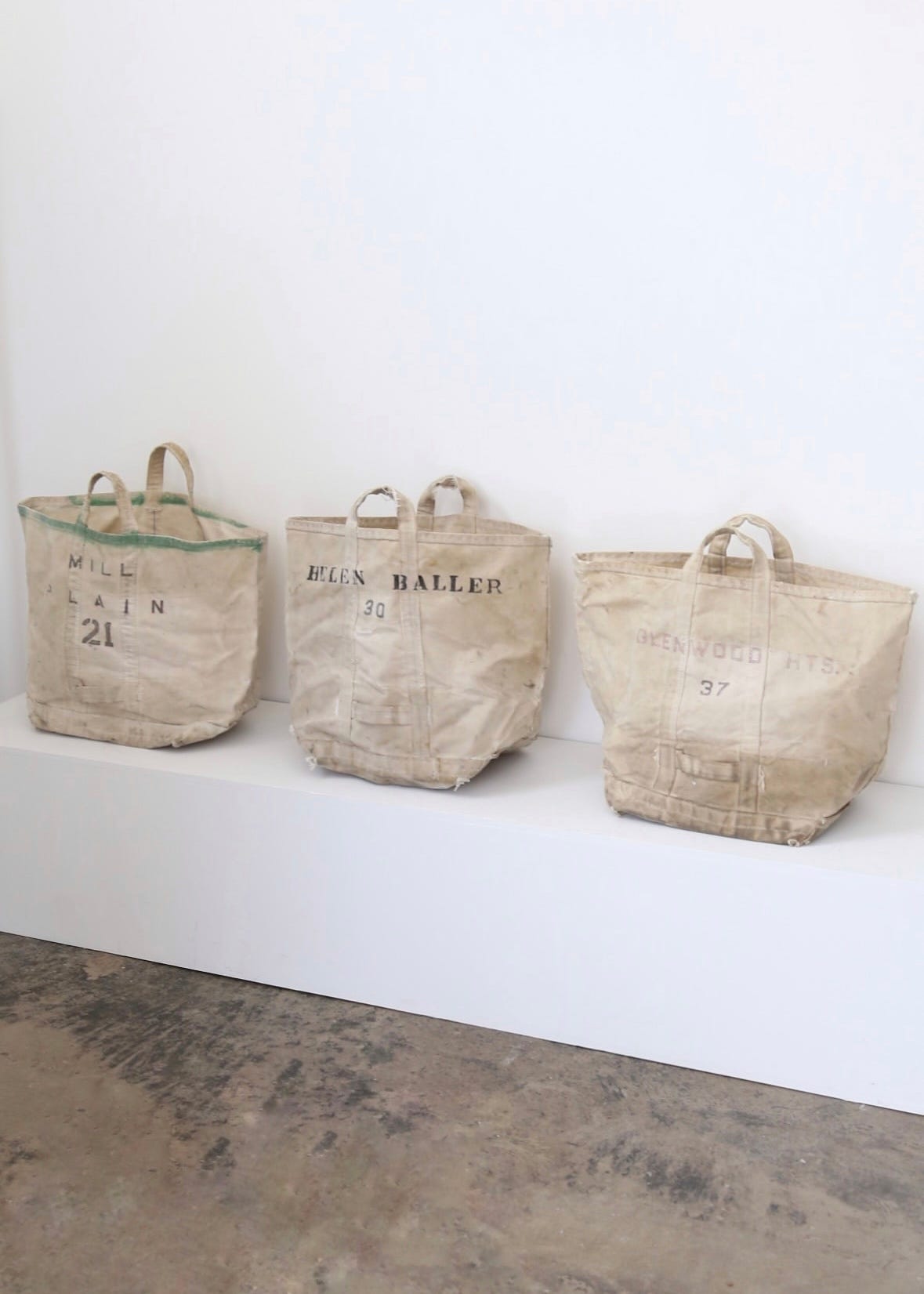
With vintage military clothing, I love that same sense of purpose. They were made to perform in extreme conditions, and everything was considered in a very pragmatic way, with decisions made out of necessity, not aesthetic. I think that kind of intention creates a timelessness that people want to replicate.
On top of that, clothing from this era was made from 100% cottons, wools, and leathers that were meant to last a lifetime or more, which I’m really drawn to as well.
Are you into any modern brands that use vintage workwear or military as an inspiration? What’s needed for them to pull that off?
I definitely appreciate certain modern brands well, especially ones that approach clothing with the same level of intention and detail that I admire in vintage. Brands like Henry’s and James Coward stand out to me because of their fabric choices, construction and respect for proportion. Their garments feel considered rather than over-designed.
What I appreciate most is when modern brands don’t just replicate vintage, but reinterpret it. They take inspiration from workwear or military garments and refine the fit, fabric, or finishing in a way that feels current.
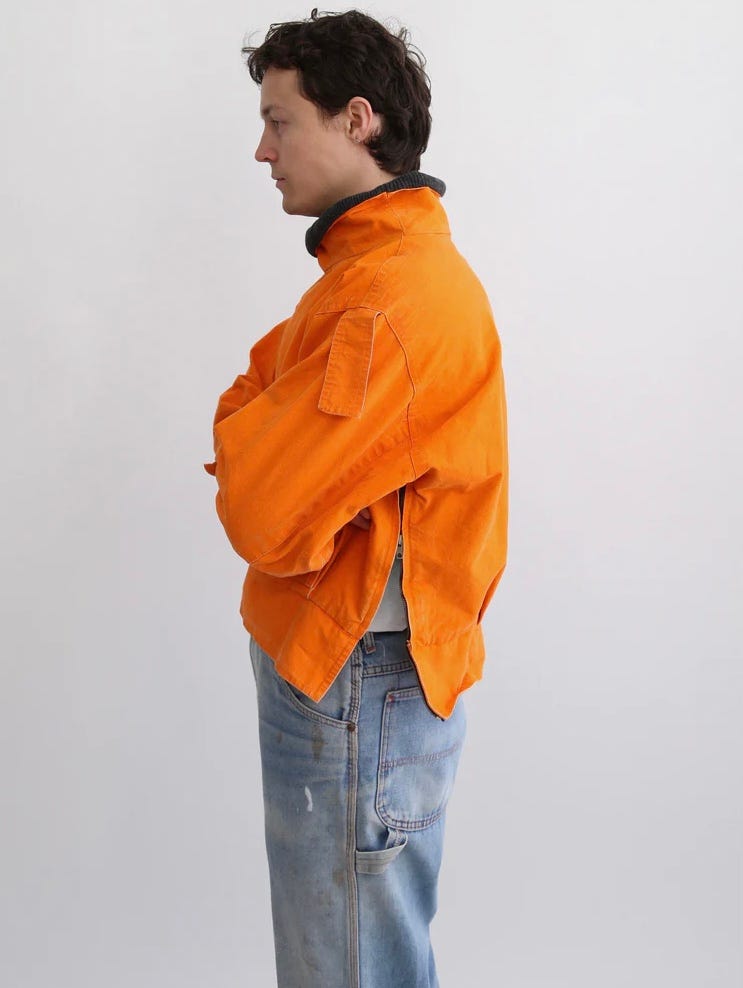
There’s been a vintage boom in recent years, with some people in the business feeling its past its prime. How do you feel vintage has changed since you started in 2017?
Overall, I’m happy to see the vintage boom. More people are becoming knowledgeable about why certain vintage pieces hold value, and that understanding makes it possible for us to sell the things we’re genuinely passionate about.
At the same time, it’s definitely made it harder to find really old, great pieces — but that’s just part of the job now. You have to adapt and source differently. I remember not too long ago people would just toss me old stuff because I was the weird guy who wanted dirty, ripped-up work jeans. That would never happen today because of the internet and the hype around “true vintage.” More people are looking for it, and there’s much more competition than there used to be, also because of a growing awareness of what certain pieces are worth.
But honestly, I’m all for it. The more the merrier. I love old clothes, and seeing younger kids get into them gets me hyped. I can get really nerdy about details — buttons, stitching, fabrics — and I’m still learning new things all the same.
Where do you typically find the pieces you’re selling at Swimmers?
We travel a lot and step at every antique store, thrift store, and estate sale we can — mostly around Utah, but we visit surrounding states as well. Since our daughter was born we haven’t been traveling quite as much, but we’re hoping to get back out on the road more this summer. We’re also lucky to have a really strong local vintage community here that sells to us, which helps a ton.
From what you say, I gather that prices for vintage prices has been soaring. Why is that?
Most, if not all, of the vintage pieces that hold significant value are largely determined by the Japanese market, really. I don’t know if they’re necessarily overvalued, but Levi’s first and second edition jackets have gone absolutely bonkers in price lately, and we sold most of ours before this major boom. Oh well!
You mentioned you can get really nerdy about details. Please go nerdy on me. What buttons do you like? What types of stitching? Which fabrics?
Okay, okay! Well, I love “Laurel wreath” buttons that were used by the US Navy during WWII. They also showed up during that time on workwear garments like chore coats and denim jackets.
Of course, hand-sewn buttonholes are another detail I really love. They were done out of necessity on early denim and workwear from the late 1800s into the early 1900s, and even small manufacturers continued doing them for a while because the machines were expensive to buy. I’ve only had two items with that detail.
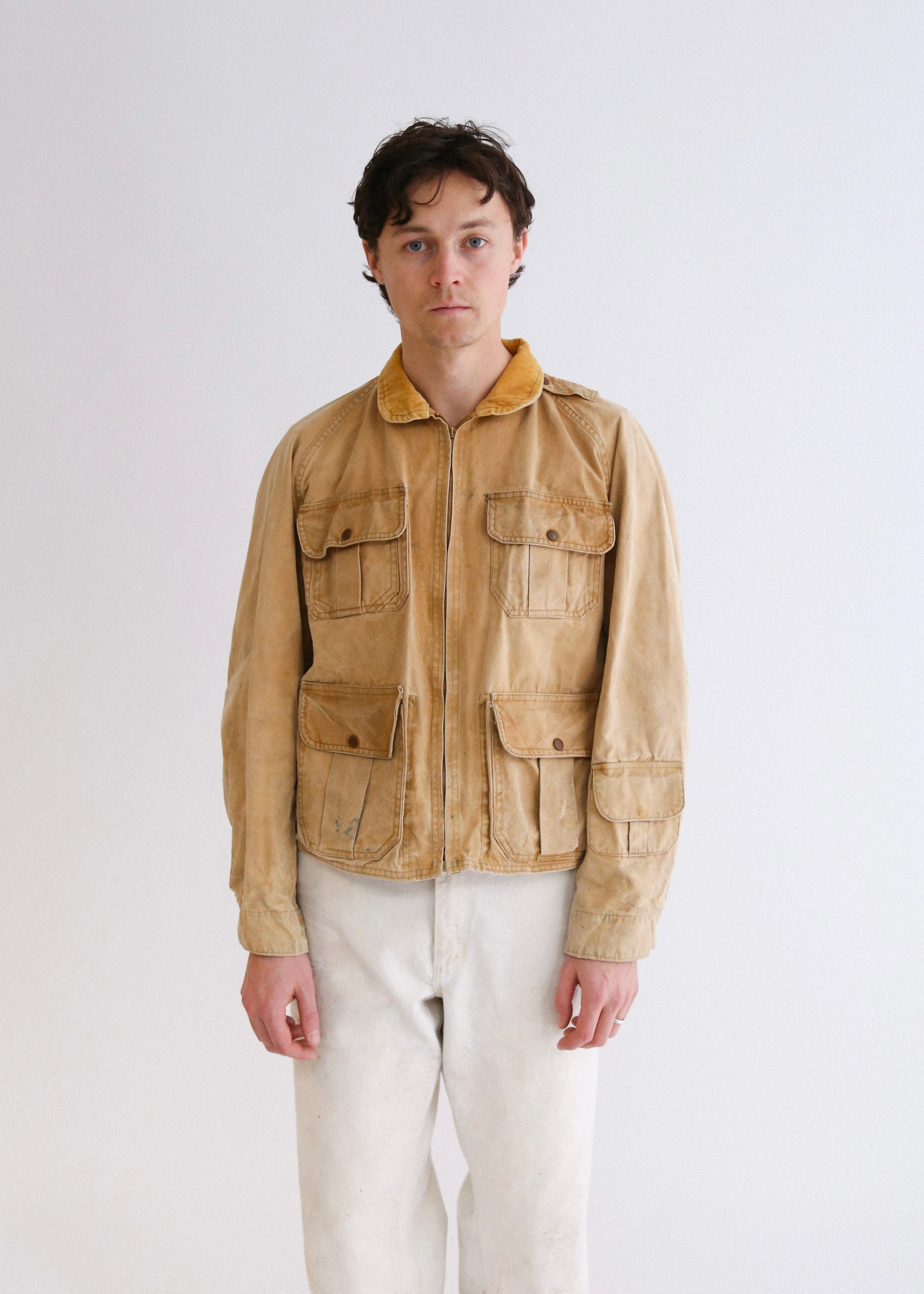
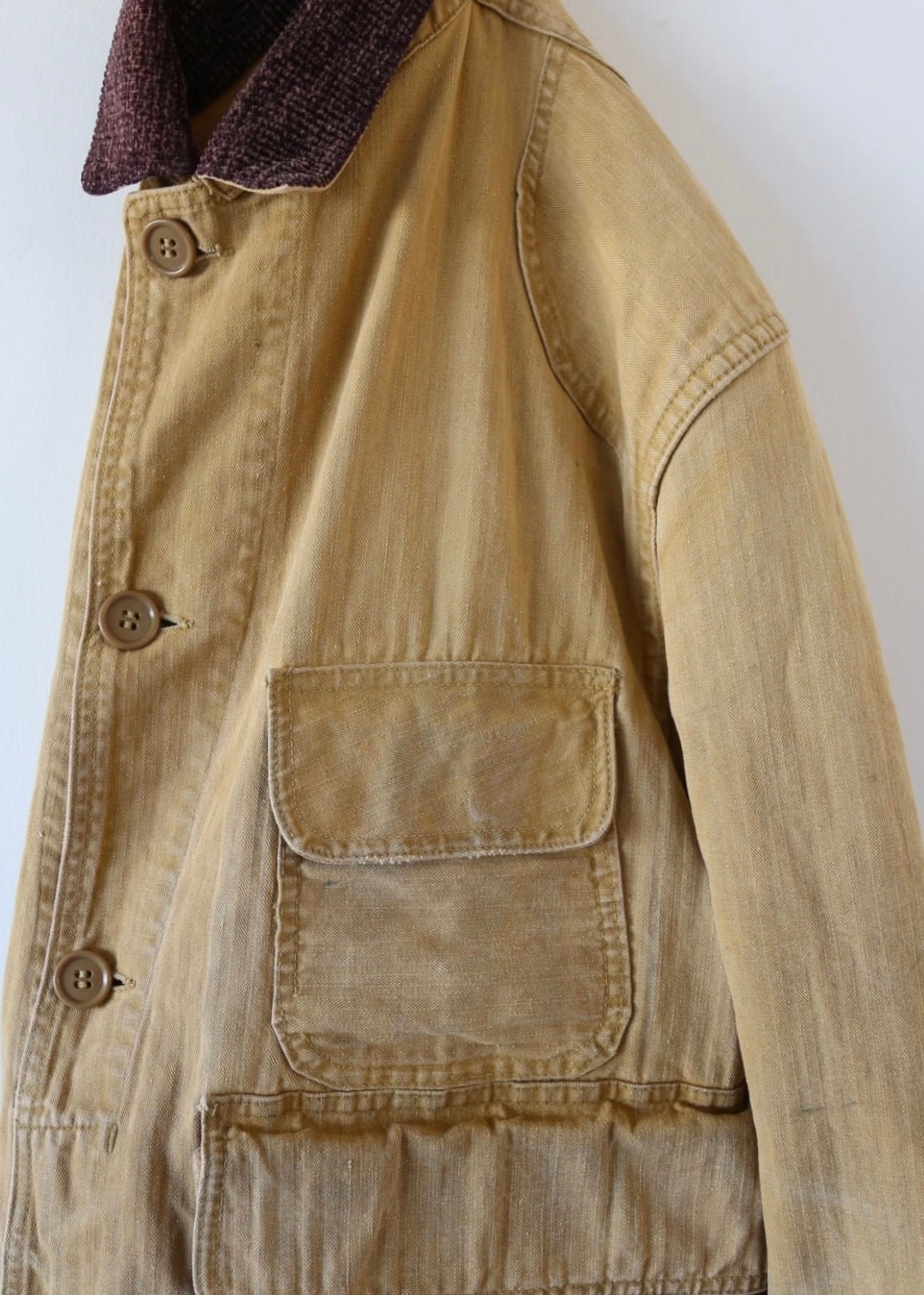
I also love finding HBT, or herringbone twill. I’ve always liked HBT because it was widely used during WWII for military uniforms since the weave made it strong but still breathable. We’ve had a certain hunting jacket that used HBT in the 40s and 50s and the fabric is just so good. We also had a war-era chore jacket that was made from a white HBT that was really beautiful and it also had Laurel wreath buttons!
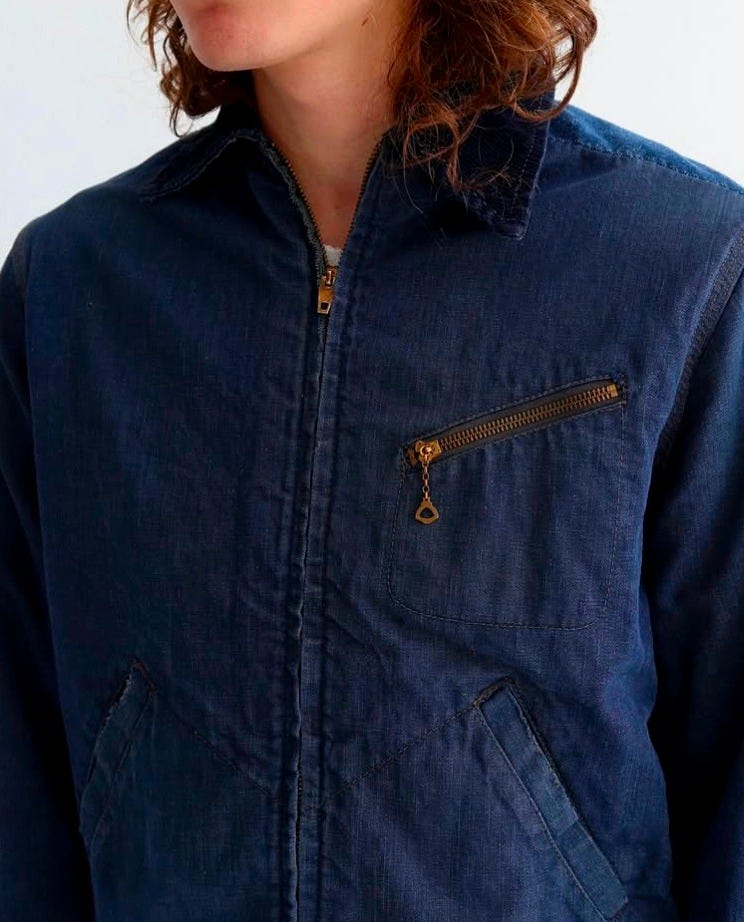
Lately I’ve been particularly interested in early French work jackets made from indigo linen. The way that fabric fades over time is really beautiful to me.
Swimmers is an appointment-only showroom. What’s the benefit of operating that way? And what are the downsides, if any?
Swimmers was open to the public for a while, but we realized pretty quickly that most local vintage shoppers weren’t necessarily looking for — or wanting to spend a lot of money on — something like a faded and distressed 1940s work jacket. Because of that, we switched to an appointment-only model and started focusing more on selling the older, more exciting (to us) pieces online where there’s a larger audience for that kind of clothing.
The benefit is that when people come in, they’re usually very interested and want to spend time looking closely at the garments and hearing the stories behind them. It makes the experience feel a lot more personal. The downside is that the shop isn’t as accessible as a normal retail store. But for the kind of vintage we’re most excited about, it’s worked really well for us.
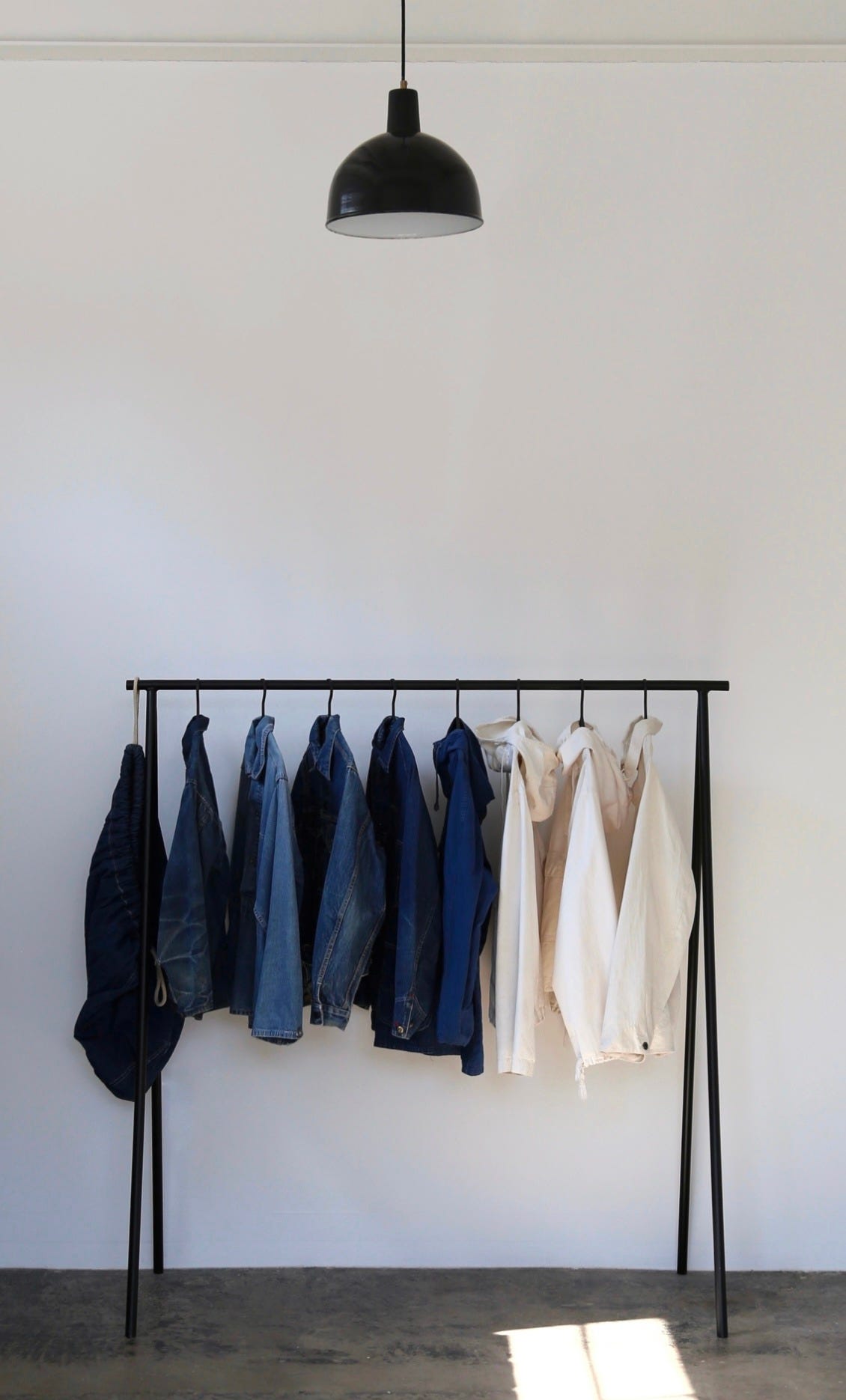
Right now, we’re in the middle of renovating the Swimmers showroom. It’s been a slower process because we just had a baby girl four months ago, so we haven’t been taking appointments for the past six months or so. We did open a sister store called Diver about a year and a half ago that’s open to the public. It’s a more playful version of Swimmers — less hyper-curated and a little more accessible, with something for everybody.
You recently launched your own line of clothing as well, starting with the Swimmers 01 Work Jacket. Why would an “old clothes store” start making new clothes?
Running a vintage store means we’re constantly handling garments that were made with great care, durability and purpose. Over time you start to recognize certain pieces that feel almost perfect because the design has already proven itself over decades of use.
One item that really stuck with me was a 1940s Never Rip-Um work jacket that I had found and wore all the time. It had everything I love about vintage workwear — great fabric, simple construction, and thoughtful details — but after years of heavy wear it was starting to fall apart. It was always in the back of my mind to recreate that jacket and change a few details to make it feel a little more current.
How did the jacket materialize?
Well, fast forward about seven years and I was talking with a friend of mine who lives in Japan and works closely with a few clothing manufacturers there. I mentioned how I’d always had this idea of making that jacket, and the conversation quickly turned into, “well, why don’t we actually do it?” From there he helped connected us with the right people. We also brought on my very stylish and knowledgeable friend Joey Johnston, who I had talked with over the years about this particular project, and it all started to come together pretty naturally.


Tell me a bit about the jacket itself.
The jacket is made in Japan from 12oz Japanese cotton serge and finished with corozo buttons. The fabric settles in and improves with wear over time and breaks in beautifully. The original jacket had a placket that crossed over at the top, but we simplified that so it buttons straight up instead.
And what’s next for the Swimmers line?
We’ve talked about exploring the same jacket in different fabrics. There are a few things we’ve been experimenting with behind the scenes — including a denim version but not just your average denim. We’re trying to take things slowly and make sure each piece feels considered before we release anything new.
The new Swimmers drop will be online next Thursday, March 26 at 12pm MT. Among other items, it contains a 60’s Sunfaded Red Track Hoodie, 50’s Faded Grey Work Jacket, 60’s Cropped Fishing Jacket and a handful of pairs of 60’s OG-107 US Military Trousers. As a token of appreciation, paid subscribers will receive early access via the password/link below.
