
Cotton + Kettle = Cottle
A new wave of Japanese menswear

When I started writing this piece a few months ago, I — naively and a bit pompously — thought my goal would be to help introduce Cottle to the world. I pitched the idea to various platforms, from Highsnobiety to GQ and Selvedge, in the hope that they would pick it up, eager as I am to publish more often and more widely. It turns out the world had other plans, both for Cottle and myself.
Since my conversation with founder and designer Toshiaki Watanabe in Paris last January, Cottle has become available outside Japan at the likes of Neighbour and Canoe Club and was featured in an episode of Ken Sakata’s popular YouTube series as well as in three recent Blackbird Spyplane ‘sletters. All the while, my pitches weren’t picked up — just kindly rejected or silently ignored.
It’s a good thing for an ego to be destroyed every once in a while. It makes room for something more selfless, which after all is also exactly what this whole Present Forever thing is about. “Please continue to carry out your activities with dignity, adhering to the philosophies that you hold dear.” That’s what Toshi wrote me a few weeks ago. It’s an advice I gratefully take to heart. But it’s also more than an advice for me personally, of course: it’s a single-sentence phrase that captures the ethos from which Toshi himself has been pursuing Cottle since the start.
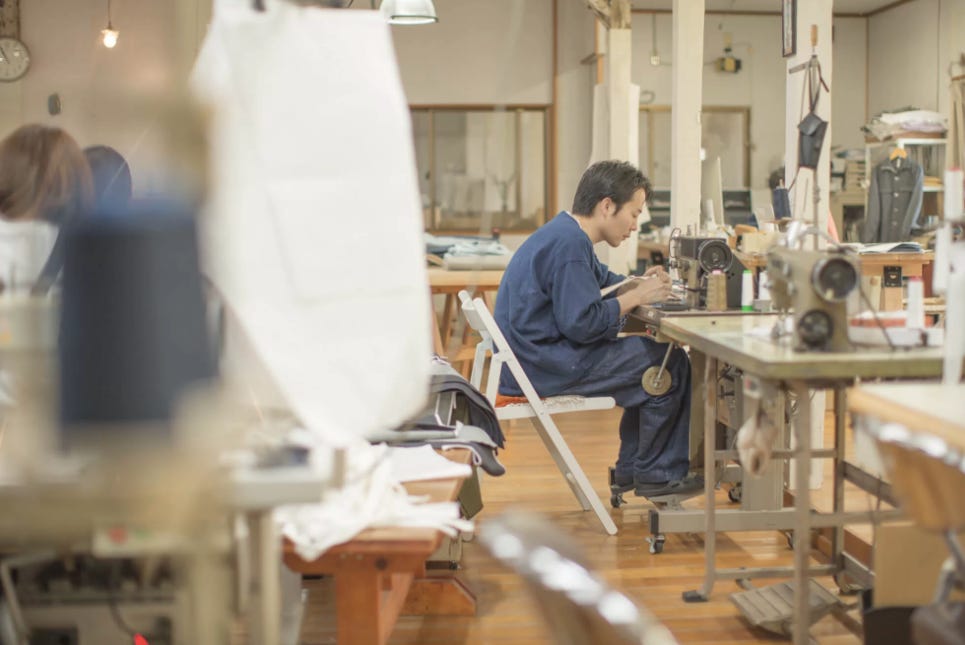
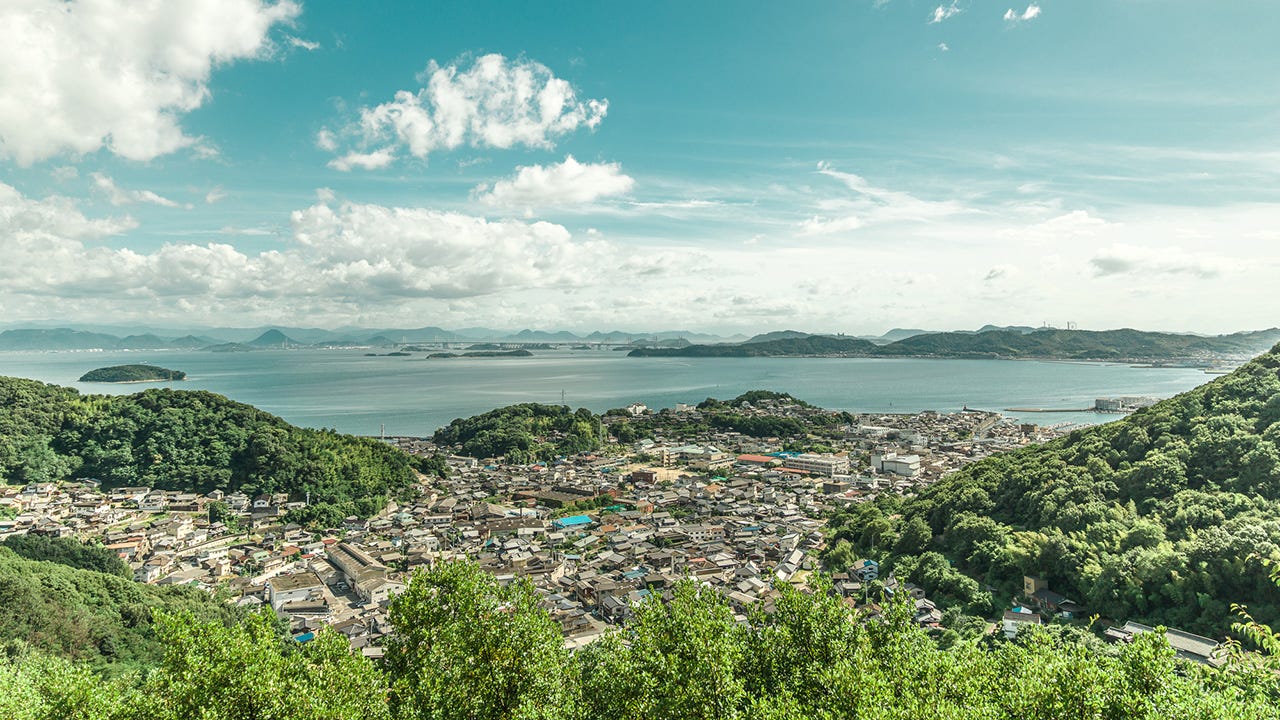
Like Yohji Yamamoto, Jun Takahashi, Ryota Iwai of Auralee and Yutaro Miyauchi of Blanc, Toshi graduated from Bunka Fashion College in Tokyo. Around 2015, he bought and restored an old, run-down wooden factory in Kojima, in the Okayama Prefecture — incidentally his own birthplace and as well as that of Japanese denim, where most of the country’s sewing factories, mills, and dyeing workshops associated with denim are still located. Today, Toshi runs the brand with his wife, Yukari — whom he met at college — and a team of six people from their showroom/atelier, working with vintage sewing machines and old-school cutting tools and overseeing basically every step in the process from idea to product.
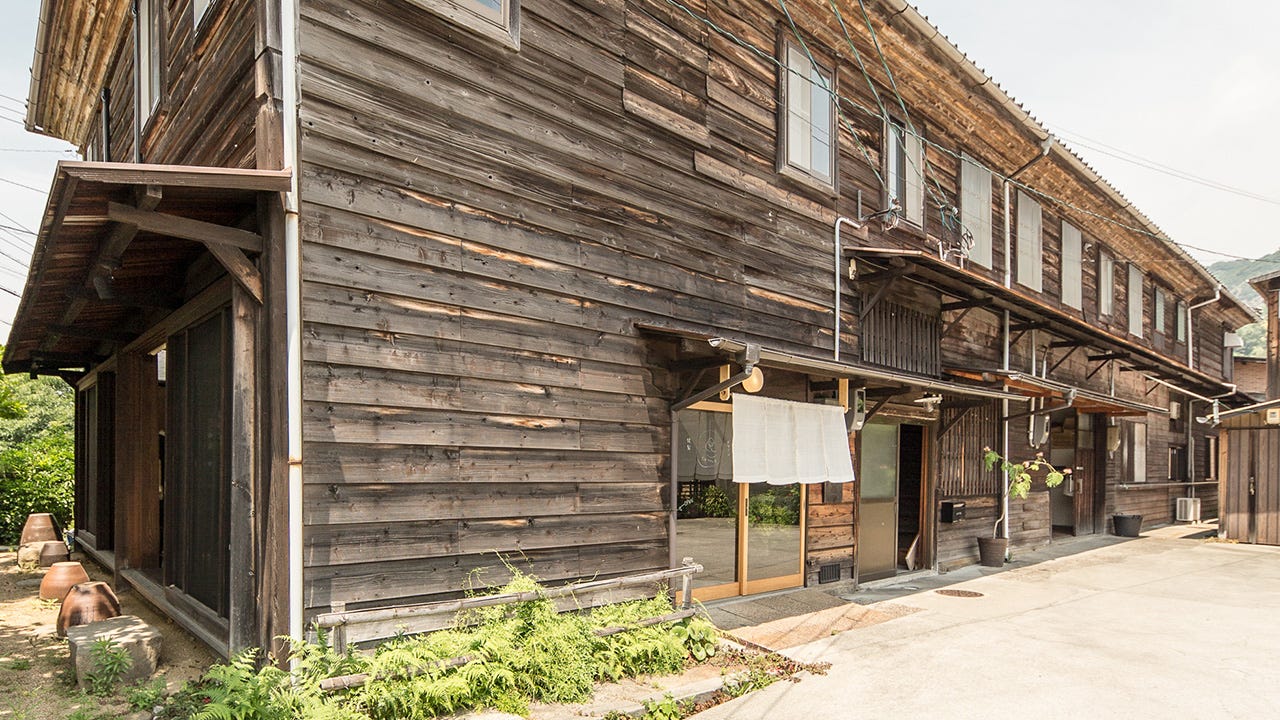
Because of the radically hands-on approach, where they also do their own samples for instance, the team can start completely from scratch and let a trial-and-error process unfold, twisting and tweaking a design in any possible way they see fit. Once this stage is finished — which in Cottle’s case can take up to two or three years — all pieces are sent into production at factories within a twenty minute ride, to be checked and approved in-person by Toshi himself.
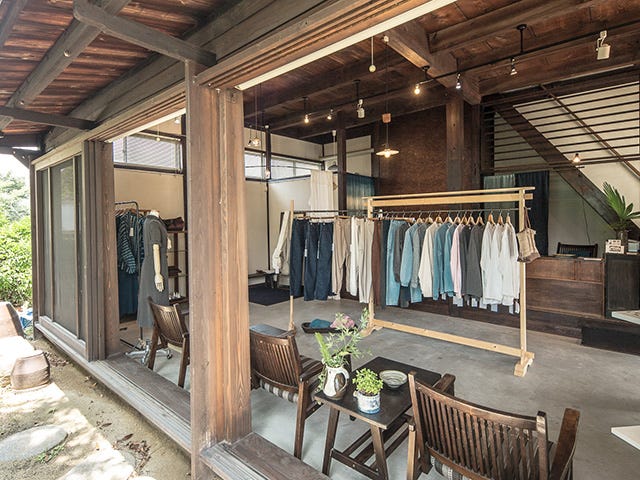
Looked at from afar, it can be hard to believe Cottle is a single brand. When talking to Saager Dilawri — owner of Neighbour and one of the kindest and sharpest menswear buyers out there — I was glad to find out he and I had felt similarly confused at first. It’s probably why there’s now an official Cottle Dictionary available on their website. Here it’s explained that instead of seasonal collections, the brand offer a permanent collection of made to order pieces that develops gradually over the years. This permanent collection consists of two main lines, which each contain two sub-lines, reflecting different aspects of Kojima’s traditional crafts: ‘Uniform for Living’ (‘Standard’ and ‘Golden Wheat Field Corduroy’) and ‘SenkohSuiu’ (‘Earth Wall’ and ‘Leaf Vein’). Saager told me he was first drawn to the more forward-looking items, then to the more traditional ones, and ended up stocking a mix of 12 (of a total of about 200!) different Cottle items at Neighbour.
The Cottle of the first line is the Cottle of high-quality wardrobe essentials, especially incredible denim pieces, like these ‘Standard Pants’ cut from a custom woven 14oz cotton/linen denim in a faded indigo wash. There’s also the ‘C.T.L. Neo Type 2ND Corduroy Jacket’ and ‘Champetre Bouquet Shirt’ combo, for instance — which both come in a dreamy pale blue achieved using a variation of natural indigo dye — as well as this ‘Sunset Pile Jacket’, a cashmere-soft fleece with persimmon-dyed panelling.


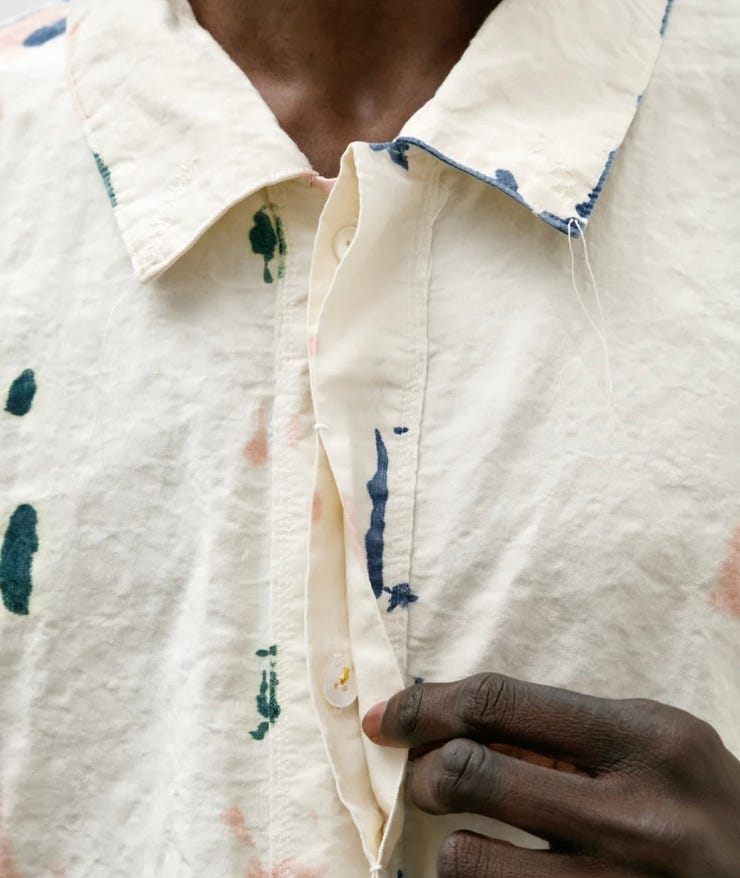
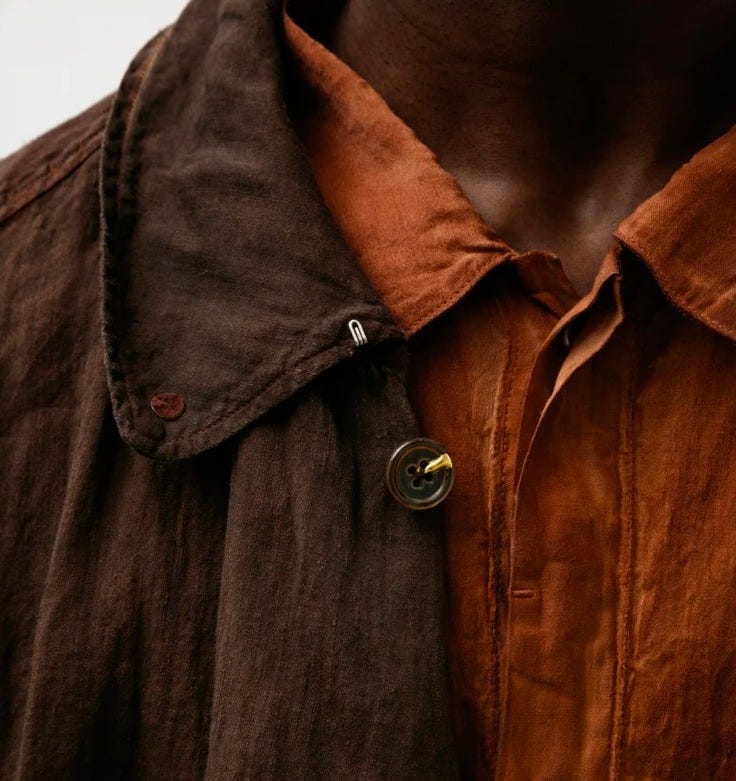
The Cottle of the second line is the Cottle of artisanal craftsmanship, combining earthy natural pigments and materials with local dyeing techniques. ‘Earth Wall’ is inspired by a wall at the entrance of their studio, made from stone, steel powder, bamboo and straw. All pieces of this sub-line are made from an irregular cashmere and wool yarn. They have a slightly darker aesthetic and come in somewhat traditional Japanese silhouettes, like the ‘Bouquet Jacket’ or ‘Sand Beach Balmacaan’. ‘Leaf Vein’ is lighter and a bit more modern, inspired by the vascular structure of leaves. One highlight is the ‘Tailor Made Shirt - Fermentation’. This is a loose-fitting overshirt cut from their own super fine, silk/cotton/hemp ‘Leaf Vein’ cloth, with a fermentation pattern produced by hand painting natural dyes onto the fabric which permeate through the cloth.
Cottle, as Ken Sakata recently observed, is at the forefront of an exciting new wave in Japanese fashion — a fifth wave, if you’d adopt Noah Johnson’s categorization. For several decades, Japanese menswear has been defined by one characteristic: exact reproductions of vintage American garments. Because of the work of Buzz Rickson’s, The Real McCoy’s, and an entire industry of other “repro” brands, many have come to believe that the most “authentic” Levi’s 501, say, are made in Japan. In his much-lauded book Ametora, W. David Marx traces the Japanese assimilation of American fashion over the course of the twentieth century. “About 50 years ago or so, everyday American clothes were imported into Japan,” said Toshi in a previous interview. “This contributed to the development of the local industry [in Kojima].” What Sakata calls a new wave is an act of gratitude for Toshi: “We would now like to spread the new interpretation of Japanese denim to the US.” What Cottle does arguably goes further, and is more complex, than that.
There’s none of the “flattened global chicness,” characteristic of an Auralee, Comoli, and Kaptain Sunshine. Yet, it’s definitely less out-there than Kapital or the Nepenthes bunch. But then again, there are the traditional craft details — embroidery, irregular stitching, Kakishibu dyeing — which Japanese quiet luxury lacks. More than either Kapital or Visvim, though, Cottle is about a singular attitude towards making clothes, driven not by brand identity but designer personality, not by commerce but by obsession. It’s what makes them more akin to an A.Presse, Taiga Takahashi, or Unlikely Drygoods, expect for the vintage American workwear aesthetic that these labels share. Cottle is quintessentially Japanese, yet pretty much unlike any other Japanese brand.
And they can be said to be changing the cultural exchange in fashion between Japan and America too. That change has been going on for a couple of years now, with American-based brands from Evan Kinori to Aviva Jifei Xue eagerly sourcing fabrics and drawing inspiration from Japan. Cottle is pushing further, however. They’re not just re-interpreting “Japanized” American staples, but mixing traditional techniques and silhouettes with a contemporary Japanese style and sensibility. The result is a new phenomenon altogether, something between un-American Americana and future-oriented Japanese heritage.
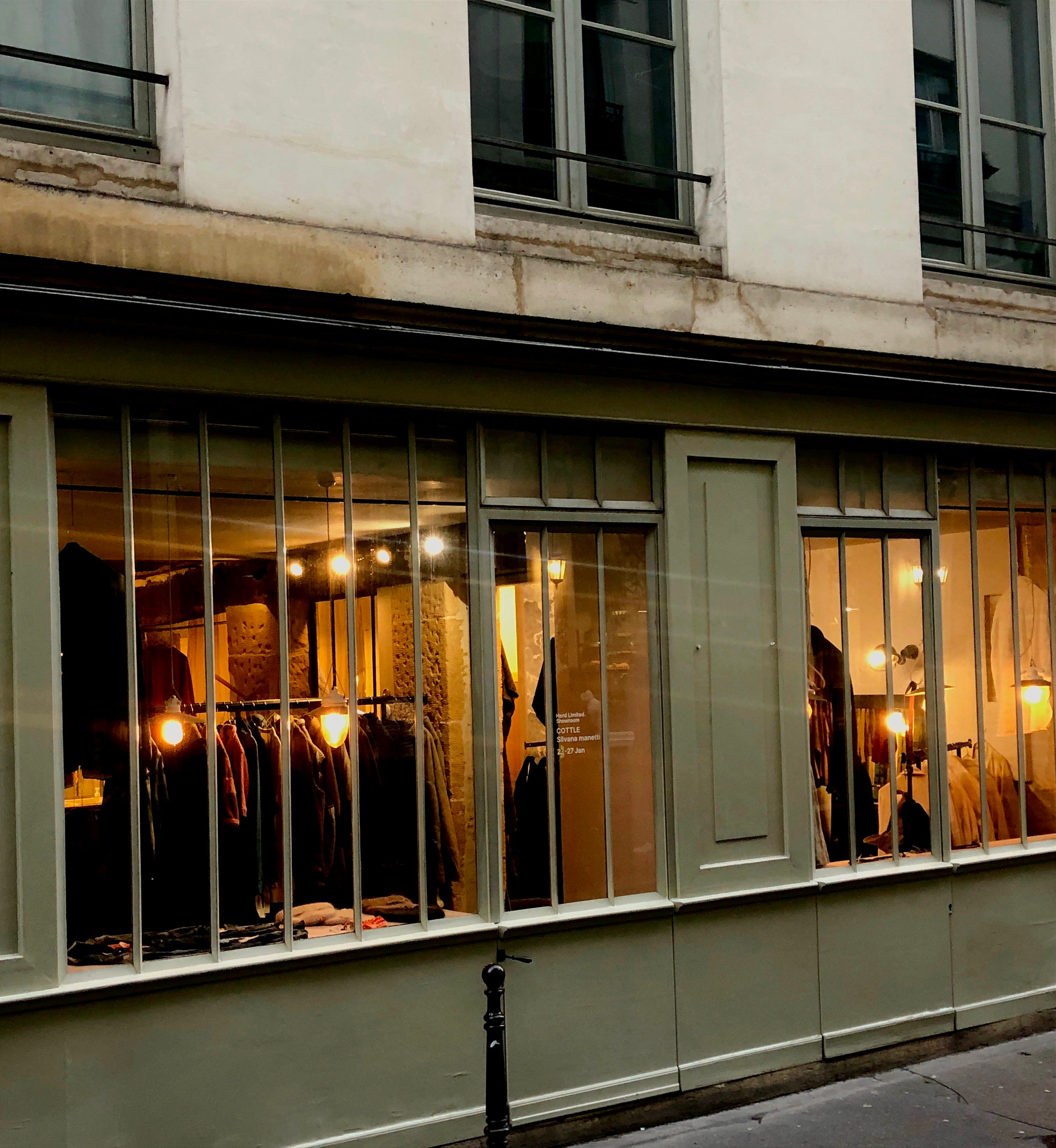
My conversation with Toshi at Cottle’s Paris showroom was special in several different ways: it lasted well over an hour but was completely impromptu, it took place through a wonderful English-Japanese translator — Soline Morterol — and its soundtrack was a playlist of ‘80s soft pop. At the very end, just before leaving, I became aware of the fact that Toshi had carried all of the pieces in the showroom solo from Japan. That’s commitment incarnate.
Cottle’s collection is really wide-ranging. Could you tell me how you see the relation between ‘Uniform for Living’ and ‘SenkohSuiu’, the casual and the artisanal?
It’s actually very simple. When my three daughters play with their friends, it’s easier for them to move around in jeans and hoodies. But sometimes, when we go somewhere else in the evening, my family prefers to wear different clothes. The two lines they’re like different small worlds that are also connected. We use the same natural dyes for both, for instance. And they can work really nice together because there’s a balance, a common point between them. At the same time, neither of them is like a compromise. This means my work on both can be entirely free.
Could you tell me about the origin of the name, by the way. What does it stand for?
My name is Toshiaki Watanabe. “Wata” in Japanese means cotton, and “nabe” means kettle. Cottle is just a mix of the two English words in my surname, “cotton” and “kettle.” It’s simple, really.
On the basis of some research, I got the impression that Cottle doesn’t operate like most fashion brands do. Is that true?
Yes, we have a particular vision that expands to all aspects of what we do. We’re not a traditional fashion business, for sure. We don’t produce two seasonal collections every year, for example. When we make new pieces it’s because we’ve managed to create a new fabric and came up with new designs adapted to that fabric. The final result is just going to increase our permanent offering. I’m often asked “which products are new?” And we spend a lot of time explaining that’s not how we work. We do made to order in our atelier as well as global wholesale, and for both the time between order and delivery is about three to four months now. We also don’t have any stock and don’t do any sales or discounts.
And could you give me a sense of the process over the course of these three to four months?
Everything is made in our own atelier. My wife and I are responsible for all steps of the process, from design and pattern making to fabric sourcing and sewing. At first it was just the two of us making all the pieces. As Cottle has grown bigger, there are now five employees working in the atelier as well.
How do you think of Cottle on the emergent landscape of Japanese fashion brands?
There are a lot of Japanese brands. Like some of them, we make our own original fabrics in collaboration with mills. This is at the heart of Cottle’s practice. In Japan, every area has its specific expertise, whether it’s thick wool from Nagoya or high-density fabrics from Shizuoka. It’s been a tough time for textile manufacturers in Japan. What may make us different as a brand is that I try to help and keep this industry, with its traditional techniques, alive.
What’s actually involved in creating a new fabric from scratch?
There are two main ways. The first way is for me to make something that represents nature and natural beauty, like leaf veins. Another way is for a manufacturer to want to make a certain fabric, but needing someone to invest in it. Both are essentially collaborative, like a dialogue. Let’s say I go to a traditional manufacturer and he says: “Okay, I would like to create this sort of fabric. But I also want to keep on producing this material, so maybe could you also experiment with it?”
Is this the part of running Cottle that you enjoy the most?
I enjoy making my own things in every possible way. That’s what gives me satisfaction. Of course, the more you do, the more you experience. And that experience also involves challenges. And my way is just to roll along. To be part of the process. That’s satisfying to me, whatever it is.
Cottle is deeply rooted in your home region of Kojima. At the same time, it’s becoming more and more globally available and, as such, possibly somewhat detached from its roots. How do you look at this dynamic?
Everything I do, emerges from local culture. All pieces you see, come from our atelier. Cottle is a reflection of my own life. So, in that sense, yes — it’s very Japanese. For customers from Europe or America it’s often immediately clear that there’s a Japan-ness to Cottle. But it’s not something I think about. It’s not like I intend to make it Japanese.
You know, until about hundred years ago everyone in Japan was wearing kimonos. No pants, no shirts, or whatever. In that sense, Japanese clothing history is very young, also when compared to America or France. Levi’s, for example, has been around since the 1800s, and British tailoring goes back to around 1600. Looking at this history, when Japanese people started making clothes, they were initially just imitating, or at least re-interpreting existing clothes in terms of their own culture. Every Japanese brand carries this history within itself, so to speak.
The Japanese word for “clothes” is quite complex. “Fuku” means clothes or dress, but “yofuku” refers to Western-style or everyday clothes and “wafuku” to traditional Japanese clothing. So, you might hear people use “yofuku fuku” to clarify which type of clothing they’re speaking of. It’s the same for designers. When Japanese designers make clothing, they’ll be doing so from a Westernized perspective, whether deliberately or unconsciously, even when its features are clearly Japanese. Japanese clothes are always already a cultural exchange.
And, finally, could you tell me what you’ll be working on when you return to Japan in a few days?
For now, we’re really pleased with the buyers and clients that have visited our Paris showroom. Cottle will be stocked in the US and Canada — Neighbour and Santa Fe Dry Goods — as well as at more European stores, in Switzerland, France, and England — Carrousel and Mouki Mou, for instance. And maybe also in the Netherlands soon.
I aim to introduce some new pieces by December of this year. They’re made from a secret new fabric. We haven’t made a final decision about the name of the new sub-line yet. It’s all very much in process.